

How to Choose Safe Cat Beds: A Buyer's Checklist
Table of Contents
- Why Safety Matters More Than Style in a Cat Bed
- Safe Materials for Cat Beds: What to Look For
- Checking Construction and Stitching Before You Buy
- Heated Cat Bed Safety: Electrical and Heat Features
- Cat Bed Size Guide: Measuring Your Cat for a Safe Fit
- Choosing the Best Cat Bed for Kittens, Seniors and Special Needs
- Your Safe Cat Bed Checklist Before You Order
- Frequently Asked Questions
Last Updated: October 30, 2026
Why Safety Matters More Than Style in a Cat Bed
A cat bed sits in one spot for hours every day, sometimes for years. That makes the materials and construction of safe cat beds more important than their color or shape.
Safety starts with what the bed is made of and how it is built. Start by checking the basics before you check the design.
A cat bed is a product your cat will chew, scratch, knead, and sleep on.
- Check materials before style
- Look for firm stitching and no loose parts
- Choose covers you can wash easily
- Avoid beds with unknown chemical treatments or strong odors
Watch out: a bed with a strong chemical smell right out of the package may have been treated with finishes you do not want near your cat.
Safe Materials for Cat Beds: What to Look For
Safety, though, comes down to what the fabric and filling are made of and what has been done to them. A cat kneads, chews, and grooms on the bed for hours, so anything that off-gasses, sheds, or irritates skin ends up in close contact with the cat.
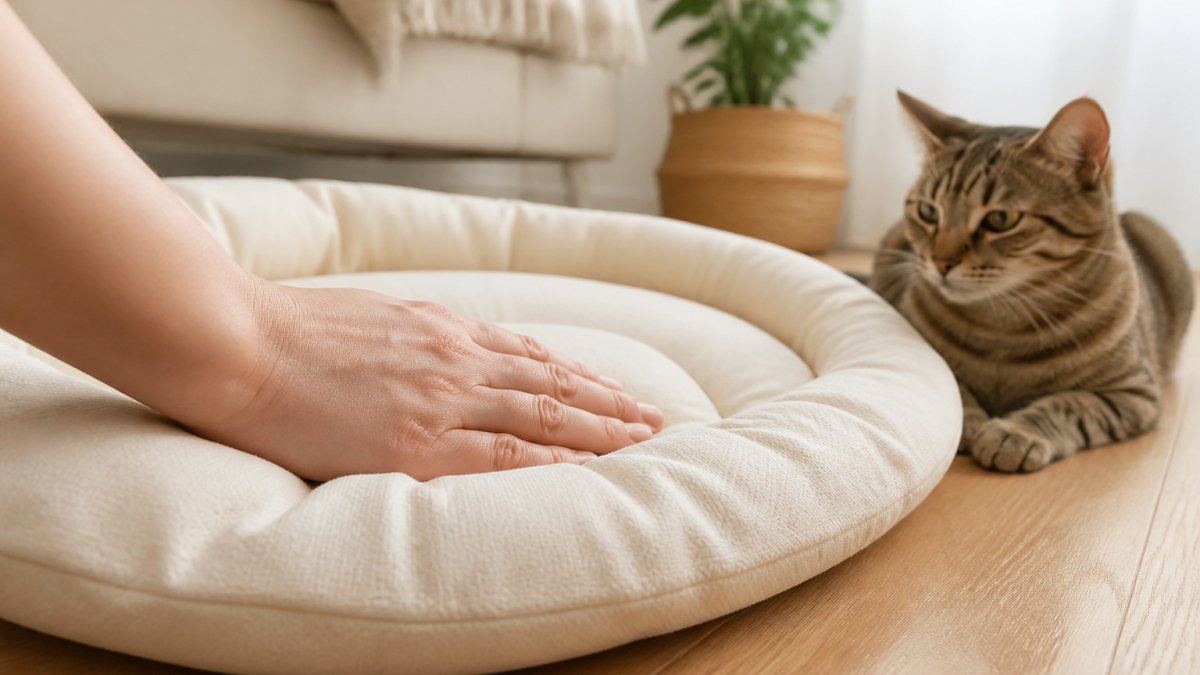
Separate verifiable claims from marketing language
"Toxin-free," "pet-safe," and "eco-friendly" are marketing phrases rather than standardized certifications, so treat them as unverified until you can confirm a specific fact. What you can realistically confirm:
- Fiber content on the care label. A label that names exact fibers (for example, 100% cotton, polyester fiberfill, or a stated blend percentage) is more useful than "plush" or "premium fabric."
- A named third-party certification. Look for a specific certification body and a certificate number you can check, rather than a logo with no traceable ID. If the seller cannot name the certifier, the claim is unconfirmed.
- A published material safety data sheet (SDS) or compliance statement for treated fabrics or foams. Ask the seller for it in writing.
- Country-of-origin and importer information on the label, which tells you who is accountable if something goes wrong.
A short email to the seller asking "What is the exact fiber content, and can you send the care label and any certification number?" filters out vague listings fast. A seller who cannot answer is a seller whose safety claims you cannot rely on.
Check for chemical finishes and odors
New bedding can carry sizing agents, flame retardants, dyes, or anti-wrinkle finishes. You will not see these on a typical label, but you can screen for them:
- Smell test. A sharp chemical or perfume-like odor right out of the package is a warning sign. Air the bed in a well-ventilated room for several days; if the odor persists, return it rather than putting it in your cat's sleeping spot.
- Rub test. Wipe a damp white cloth across the fabric. Heavy dye transfer or a slick, coated feel can indicate a surface finish you may not want against a cat that grooms itself.
- Loose fibers and dust. Shake the bed over a dark surface. Excessive shedding fibers or fine dust suggests poor finishing and a likely allergen source.
Match filling to wear and replacement
Polyester fiberfill is common, holds shape reasonably well, and can be refreshed by fluffing. Loose foam crumbles over time, and the crumbs can end up in a cat's mouth or eyes. Cotton batting is breathable but compacts with washing. Whichever filling you choose, confirm the cover can be removed or the whole bed washed, because filling that cannot be cleaned becomes a reservoir for hair, dander, and odor. To compare greener fabric and filling options, see our eco-friendly pet supplies guide.
- Tightly woven fabric resists claws better than a loose knit
- Fiberfill or cotton batting is easier to refresh than crumbled foam
- A removable, washable cover extends the safe life of the filling
- Non-slip and moisture-resistant bases help on hard or damp floors
Read the care label before you commit
Look for explicit washing directions, a maximum water temperature, and whether the bed is dryer-safe. A bed that cannot be washed will collect allergens and odors quickly, no matter how safe the fabric is on day one. Where a label is vague, ask the seller for the exact fiber content and care instructions in writing before you buy.
Checking Construction and Stitching Before You Buy
Construction is where most bed failures start, and most of them are visible before the bed ever reaches your cat. Run this inspection at the store or within the return window at home.
The five-minute pre-purchase inspection
- Seams. Turn the bed inside out if you can. Look for double-stitched or reinforced seams along stress points (edges, corners, and where the base meets the sides). Single lines of loose, uneven stitching are the first thing to split.
- Closures. Check zippers, ties, snaps, and hook-and-loop strips. A zipper pull that dangles, a fabric tie long enough to chew, or a snap that pops off under light pressure is a choking or ingestion hazard. Prefer covered zippers and short, stitched-down ties.
- Small parts. Squeeze and tug any button, pom-pom, applique, or tag. If it moves, it can come off. Remove loose tags before use.
- Filling integrity. Press the bed firmly across its surface. It should spring back evenly. Lumps, thin spots, or a crunching feel mean the filling has shifted or is breaking down.
- Frame and stability. Push the bed from the side. A cave or bolster bed that tips easily, or a frame that flexes more than expected, can trap or startle a cat climbing in or out.
- Cords and electronics. For any heated or vibrating bed, check that the cord is sealed at the connection, routed so a cat cannot chew it, and that the plug and controller show no heat marks.
Failure modes to watch for after purchase
Even a well-made bed wears. Check it monthly and after every wash for:
- Torn seams or split stress points, stop using the bed or repair it before filling escapes.
- Exposed filling, loose fiberfill or foam crumbs are an ingestion risk; remove the bed until repaired.
- Damaged fasteners, a broken zipper or missing snap means the cover can come off and bunch under the cat.
- Persistent odor after washing, a sign that moisture, bacteria, or pests have reached the filling; replace the bed.
- Flattened or compacted filling, reduced support, especially for senior cats.
A bed with exposed filling, a chewed cord, or a fastener your cat can pull off is no longer safe, regardless of how new it is. Replace it rather than patching around the hazard.
Set a replacement rhythm
A washable cover plus a monthly inspection can extend a bed's safe life. As a rule of thumb, replace any bed once the cover cannot be fully cleaned, the filling no longer springs back, or a seam has failed twice in the same spot. Keeping a spare cover on hand lets you wash one while the other is in use.
Most bed failures can be spotted before purchase, and these are the main failure points to check and how to respond to each.
| Failure point | Warning sign | Action |
|---|---|---|
| Seams | Single loose, uneven stitching | Look for double-stitched seams and stop using the bed if torn |
| Closures | Dangling zipper pull or snap that pops off | Use covered zippers and short, stitched-down ties |
| Small parts | Button, pom-pom or tag that moves | Remove loose tags before use |
| Filling | Lumps, thin spots or crunching feel | Replace the bed if it no longer springs back |
| Exposed filling | Loose fiberfill or foam crumbs | Remove the bed until repaired |
| Odor | Persistent smell after washing | Replace the bed |
Heated Cat Bed Safety: Electrical and Heat Features
Heated cat beds add electrical risks. Look for a bed with a low-voltage power supply, a sealed cord connection, and a clear auto-shutoff feature. Avoid heated beds with exposed wires or cords a cat can chew.
Winter Warm Slippers Style Dog Bed Pet Dog House Lovely Soft Suitable Cat Dog →
Place a heated bed on a flat, dry surface away from water sources and away from curtains or bedding that could block airflow. Check the cord and plug regularly for fraying or heat marks.
If you are shopping for a heated bed, compare the electrical specifications carefully before you buy. Read the manufacturer's instructions on temperature limits and supervised use.
Cat Bed Size Guide: Measuring Your Cat for a Safe Fit
A bed that is too small squeezes your cat and can cause discomfort. A bed that is too large may not hold warmth well. Measure your cat from nose to base of tail while it is relaxed, then add a few inches for comfortable stretching room.
Compare that measurement to the bed's dimensions, not just its size label. The Square Dog Bed from our catalog lists overall dimensions in centimeters for each size, such as 43 cm by 35 cm for XS and 80 cm by 70 cm for L.
For the Warm Coral Fleece Cat Sleeping Bag Bed, the listed sizes are M at 50 x 40 cm and L at 65 x 55 cm.
- Measure nose to base of tail while your cat is relaxed
- Add room for stretching and turning
- Compare the bed's listed dimensions, not only the size name
- Remember that raised edges reduce the usable sleeping area
Choosing the Best Cat Bed for Kittens, Seniors and Special Needs
Kittens need a bed that is warm, easy to climb into, and soft enough for growing joints. The Warm Coral Fleece Cat Sleeping Bag Bed is a folding, enclosed design suitable for small dogs and cats.

Senior cats and cats with arthritis need extra cushioning and easy access. For more detail, read our orthopedic bed guide for older pets.
Cats with mobility issues may need a bed with a low entry and a flat surface they can reach without jumping.
For a cozy, covered option, the Winter Warm Slippers Style Dog Bed offers a hooded nook with an open front.

Your Safe Cat Bed Checklist Before You Order
Use this checklist before you buy a cat bed:
- Fabric is tightly woven and labeled with clear fiber content
- Filling is polyester fiber, cotton, or another easy-to-replace material
- Cover is machine washable or easy to wipe clean
- Seams are double-stitched and free of loose threads
- Zippers and ties are secure and cannot be chewed off
- Bed is firm and springs back when pressed
- Size matches your cat's measurements plus room to stretch
- Heated beds have a low-voltage supply and sealed cords
- Bed has a non-slip or moisture-resistant base where needed
- Strong chemical odors are aired out before use
Once you have checked these points, you can compare options with more confidence. Browse our range of cozy cat beds and other pet sleeping options to find a safe, well-made bed that fits your cat's needs and your home.
Frequently Asked Questions
What materials are safest for cat beds?
Look for beds with a tightly woven natural fabric such as 100% cotton, which is breathable and easy to inspect. Avoid beds with unlabeled synthetic coatings, strong chemical odors, or fillings you cannot identify. For example, our slipper-style pet bed lists 100% cotton as its supplier-listed material and recommends hand washing. Check the label before buying, and if the material is not clearly stated, contact the seller and ask for the fiber content and care instructions before you purchase.
Are heated cat beds safe for cats?
Heated cat beds can be safe when they have a built-in temperature limit and a sealed electrical cord. Look for auto shut-off features and beds that stay warm rather than hot to the touch. Test the bed yourself before leaving your cat unattended, and avoid any bed with frayed cords or a heating element that is exposed through the fabric.
How do I choose the right size cat bed?
Measure your cat from nose to base of tail, then add a few inches so they can stretch and turn. Compare that number against the overall dimensions listed by the seller, remembering that the usable sleeping area is smaller than the outside measurements because of raised edges. If the listing gives only size labels such as S or M, ask for the centimeter or inch dimensions before ordering.
How often should I wash a cat bed?
Wash a cat bed about once a week if your cat sleeps in it daily, and more often if it gets dirty or shows signs of odor. Follow the care label, since some covers are machine washable while others are hand wash only. Let the bed dry completely before your cat uses it again to prevent mildew and reduce the chance of skin irritation.
