

How to Verify Pet Toy Durability: A Step-by-Step Guide
Table of Contents
- Why Verifying Pet Toy Durability Matters Before You Buy
- Understanding Materials and Construction That Signal Durability
- How to Choose Safe Dog Toys That Match Your Pet's Chewing Strength
- Durable Dog Toys for Aggressive Chewers: What to Look For
- Dog Toy Safety Inspection Checklist: Your At-Home Verification Process
- Signs a Dog Toy Needs Replacing: Recognizing Damage and Wear
- Evaluating Manufacturer Durability Claims and Testing Standards
- Frequently Asked Questions
Last Updated: October 21, 2026
Why Verifying Pet Toy Durability Matters Before You Buy
Pet toys aren't all created equal. Some fall apart in days. Others last for months of heavy play. To verify pet toy durability, you need to understand the difference: it's construction, materials, and how well a toy matches your dog's chewing strength.

Pet owners often buy toys that fail within a week. They're frustrated, their dogs are disappointed, and money's wasted. The good news: you can verify pet toy durability before your dog ever gets it. This guide shows you exactly how.
Durability matters because unsafe toys become hazards. Pieces break off. Seams tear. Stuffing comes loose. Your dog could choke on small fragments or swallow materials that cause blockages. A toy that's built to last is also built to stay safe throughout its lifespan.
The stakes are real. A quality toy that lasts weeks or months costs less per day than cheap toys you replace constantly. More importantly, your dog gets reliable play without the health risks of deteriorating materials.
Understanding Materials and Construction That Signal Durability
Not all toy materials are created equal. Rubber, nylon, and plush each have different wear profiles. Understanding what you're buying is the first step in verifying pet toy durability.
Durable rubber and nylon options
Rubber toys are workhorses. TPR rubber (thermoplastic rubber) offers good elasticity and resilience. It resists biting pressure better than soft plastics.
Nylon toys are designed for serious chewers. Nylon fibers resist tearing when pulled or chewed. They don't splinter like wood or cheap plastic.
Plush toys serve a different purpose. They're comfort toys, not heavy-duty chew toys. If your dog is an aggressive chewer, plush alone won't last.
Assessing seams, stitching, and design quality
Seams are where toys fail first. Run your fingers along every seam before buying. Stitching should be tight and even, no loose threads or gaps.
Check the design for stress points. Toys with joints (where pieces connect) need reinforced stitching at those spots.
Look at how the toy closes. If it's stuffed, the opening should be stitched securely, not glued. Glued seams separate under moisture and pressure. Stitched seams hold through repeated play and washing.
Material thickness matters too. Thicker rubber and nylon resist punctures and tears better than thin versions. Press your fingernail into the material.
How to Choose Safe Dog Toys That Match Your Pet's Chewing Strength
Matching a toy to your dog's size and chewing behavior is critical. A toy that's perfect for a Chihuahua will be destroyed instantly by a Labrador. A toy designed for gentle play won't survive an aggressive chewer.
Matching toy size and design to chewing behavior
Start with size. A toy should be large enough that your dog can't swallow it whole or fit it entirely in their mouth. A general rule: the toy should be at least as wide as your dog's mouth when open.
Chewing style matters as much as size. Does your dog carry toys in their mouth and shake them? Does your dog sit and gnaw on one spot for hours? Does your dog try to rip toys apart?
Shakers need toys with reinforced seams and solid construction. The toy experiences repeated stress from shaking motion. Gnawers need dense material that resists puncture. Rippers need toys with secure stitching and thick material that won't separate easily.
Watch your dog's play for one week before buying multiple toys. You'll see patterns. Some dogs are gentle. Some are relentless. Once you know your dog's style, choose toys designed for that behavior level.
| Chewing Style | Toy Type | Best Material | Why It Works |
|---|---|---|---|
| Gentle, occasional play | Plush with reinforced seams | Soft fabric with double-stitching | Comfortable without durability demands |
| Moderate gnawing | Rubber or nylon balls | TPR rubber or quality nylon | Resists puncture from sustained chewing |
| Aggressive, constant chewing | Heavy-duty nylon or rubber | Thick nylon or reinforced rubber | Withstands intense pressure and stress |
| Shaking and tossing | Toys with secure handles | Reinforced attachment points | Handles stay attached through violent motion |
Durable Dog Toys for Aggressive Chewers: What to Look For
Aggressive chewers destroy most toys. They need specific design features to survive.
Start with material density. Dense rubber and nylon resist puncture better than soft materials. Press the toy firmly. If your thumb leaves a deep impression, it's too soft for an aggressive chewer. The material should compress slightly but return to shape quickly.
Look for toys without small parts. Aggressive chewers will find loose threads, squeakers, or small attachments and exploit them. Solid construction with minimal seams is better than complex designs with multiple pieces.
Size is critical for aggressive chewers. Bigger toys are harder to destroy. A toy that's too small gets clamped in powerful jaws and torn apart. Look for toys at least 6-8 inches for large dogs.
We recommend checking the product description for chewing strength recommendations. Reputable manufacturers state what chewing level their toys are designed for. If a toy doesn't mention durability or chewing strength, it's likely not designed for aggressive chewers.
Avoid toys with thin walls or hollow sections. Aggressive chewers puncture hollow areas instantly. Solid construction lasts longer.
Dog Toy Safety Inspection Checklist: Your At-Home Verification Process
Before your dog plays with any toy, inspect it thoroughly. This process takes five minutes and catches problems before they become hazards.
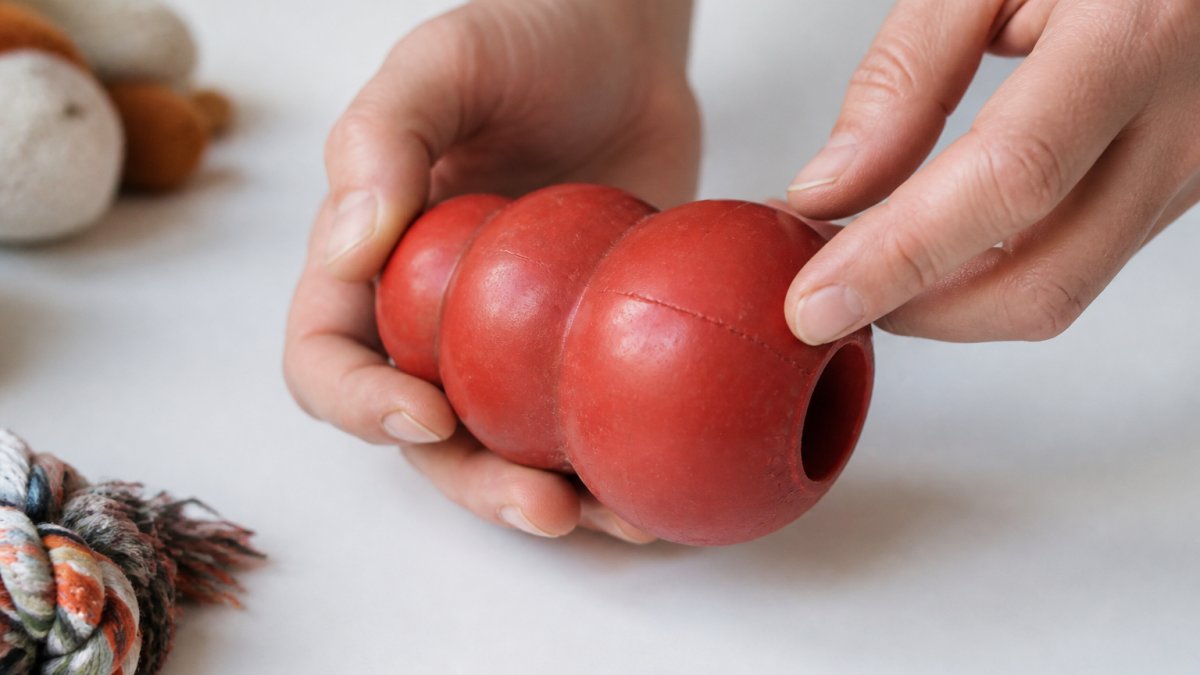
Step-by-step inspection before first use
-
Check the overall condition. Look for manufacturing defects, discoloration, rough spots, uneven texture, or visible damage. These signal weak spots that will fail under chewing pressure.
-
Inspect all seams. Run your fingers along every seam. Stitching should be tight and even. No loose threads or gaps. Pull gently on seams to ensure they're secure. Seams should not separate with light pressure.
-
Examine attachment points. If the toy has handles, squeakers, or other attachments, check where they connect to the main body. These are stress points. They should have reinforced stitching or secure bonding.
-
Test material integrity. Press your fingernail into the material. It should resist puncture. If your nail leaves a deep mark, the material is too soft. Flex the toy gently. It should return to shape without permanent deformation.
-
Look for small parts. Check for loose threads, peeling paint, or detachable pieces. Remove any loose parts before giving the toy to your dog. Aggressive chewers will find and exploit these.
TPR Large Dog Bone Rubber Pet Toy Sound Strong Bite-Resistant Pets Teethbrush →
-
Smell the toy. Unusual chemical odors suggest poor quality materials or manufacturing issues. Quality toys have minimal odor.
Objective tests and measurable pass/fail criteria
These simple tests give you concrete data about toy durability.
The flex test: Bend the toy firmly but don't force it. A quality toy returns to shape immediately. If the toy stays bent or shows creasing, the material lacks resilience.
The seam pull test: Grasp opposite sides of the toy and pull firmly for three seconds. Seams should not separate. If stitching pulls apart or gaps appear, the toy fails this test.
The puncture test: Press your fingernail into the material at several spots. Your nail should not penetrate the surface.
The odor test: Smell the toy. Chemical odors suggest poor manufacturing or toxic materials. Quality toys have minimal odor.
The color test: Rub a white cloth firmly on the toy's surface. If significant color transfers to the cloth, the dye is unstable and may leach into your dog's mouth.
If your toy fails any of these tests, return it or don't give it to your dog. One failed test means the toy won't hold up to real play.
Signs a Dog Toy Needs Replacing: Recognizing Damage and Wear
Even quality toys wear out. Knowing when to replace a toy prevents safety hazards.
Cracks, tears, seams, and loose parts
Small cracks signal the beginning of failure. A crack in rubber or nylon will expand under chewing pressure.
Tears are more serious. Any tear large enough to see should trigger replacement. Tears expose internal materials and create sharp edges.
Seams that separate or gap need immediate replacement. A separated seam means the toy is coming apart. Stuffing or internal materials will escape.
Loose parts are hazards. Squeakers that rattle loose, handles that detach, or fabric that peels away are choking risks.
Inspection frequency and durability over time
Check your dog's toys every week. A quick visual inspection takes 30 seconds per toy. Look for new cracks, tears, or loose parts.
Toys that get daily heavy use should be inspected more frequently, every 2-3 days. Aggressive chewers can damage toys quickly.
Wash toys regularly. Dirt and bacteria accumulate on surfaces. Most rubber and nylon toys can be hand-washed with mild soap and water.
Replace toys that show consistent wear patterns.
Most quality toys last 4-12 weeks with moderate use. Aggressive chewers may go through toys in 2-4 weeks. This is normal.
Evaluating Manufacturer Durability Claims and Testing Standards
Not all durability claims are equal. Some manufacturers test rigorously. Others use vague marketing language without backing it up.
Look for specific claims. "Durable" is vague. "Tested to withstand 500 hours of aggressive chewing" is specific. Specific claims suggest real testing. Vague claims suggest marketing hype.
Ask manufacturers for testing data. Reputable companies can explain their testing methods. They'll tell you what conditions they test under, how long toys survive, and what failure looks like. If a company can't answer these questions, their durability claims are questionable.
Check for third-party certifications. Some toys meet safety standards set by independent organizations. These certifications mean the toy has been tested by someone other than the manufacturer. Certifications add credibility to durability claims.
Read customer reviews for real-world data. If hundreds of customers report a toy lasts weeks, that's more reliable than the manufacturer's claim. If customers report toys fail within days, that's a red flag.
Paw Print Pet Supply carries toys like the TPR Large Dog Bone Rubber Pet Toy ($14.94), which uses TPR material with reinforced construction designed to resist biting. The Durable Chewing Toy Ball ($11.36) offers rubber construction in multiple sizes to match different dogs.

Compare claims across brands. If one brand claims durability but provides no specifics, and another brand explains their materials and testing, the second is more trustworthy. Transparency about durability is a sign of confidence in the product.
Frequently Asked Questions
How can you tell if a pet toy is durable?
Inspect the toy for dense, high-quality materials like TPR rubber or reinforced nylon with tight, even stitching. Check for smooth seams with no gaps, secure squeakers or sound components, and resistance when you apply firm pressure. A durable toy should flex without cracking and show no loose fibers or weak points. Before purchasing, research the manufacturer's testing methods and look for toys made with materials rated for aggressive chewing.
What materials make a dog toy more durable?
TPR (thermoplastic rubber) and natural rubber are among the most durable materials for pet toys because they resist punctures and maintain elasticity through repeated chewing. Reinforced nylon and high-density polyester also offer strong resistance to tearing. Avoid thin plastics, loosely woven fabrics, or toys with glued (rather than stitched) components. Look for toys with multiple material layers or solid construction rather than hollow designs that collapse under pressure.
How often should you inspect dog toys for damage?
Inspect toys weekly if your dog is an aggressive chewer, and at least every two weeks for moderate chewers. Check after intense play sessions for new damage. Look for small cracks that could expand, loose stitching, or pieces starting to separate. Remove any toy showing wear immediately to prevent choking hazards. Even durable toys deteriorate over time, so regular inspection catches problems before they become safety risks.
When should you replace a damaged pet toy?
Replace a toy immediately if you notice cracks exposing internal materials, loose seams, torn fabric, detached squeakers, or small pieces breaking off. Do not wait for damage to worsen. Even minor tears can expand during play, creating choking hazards. If a toy no longer holds its shape or feels soft and degraded, it has reached the end of its useful life. Prompt replacement protects your pet's health and prevents accidental ingestion of toy fragments.
Verifying pet toy durability protects your dog and saves money. By inspecting materials, checking construction quality, and monitoring wear over time, you'll choose toys that last and stay safe. Paw Print Pet Supply focuses on practical, dependable essentials, including toys built to withstand real play. Shop with confidence, inspect before use, and replace toys when wear appears. Your dog deserves toys that survive their play style and keep them safe.