

Stainless Steel vs Ceramic Pet Bowls: Which Is Better?
Last Updated: October 25, 2026
Quick Summary
In the stainless steel vs ceramic pet bowls debate, stainless steel wins on durability and hygiene while ceramic wins on stability and looks. We recommend stainless steel for most dog households and ceramic for cats and calm eaters. Both are food-safe when made well.
- A stainless steel bowl that falls usually bounces and keeps its shape, while ceramic chips, cracks, or shatters.
- Wash water bowls daily and food bowls after every meal with hot water and soap, then dry fully.
- Food-service stainless bowls usually use the 300 series, with 304 (18/8) the common food-contact standard.
- Retire any ceramic bowl showing chips or crazing, since damaged glaze exposes porous clay underneath.
- The Stainless Steel Pet Bowl Set with Silicone Mat costs $23.99 and is dishwasher safe.
Table of Contents
- Stainless Steel vs Ceramic Pet Bowls: The Quick Comparison
- Durability and Breakage Risk: Chips, Cracks, and Dents
- Ceramic vs. Stainless Steel Cat Bowls: What Changes for Cats
- Hygiene, Bacteria, and Odor Retention
- The Safest Pet Bowl Materials: Glaze, Lead, and Food Contact
- Weight, Stability, Noise, and the Best Water Bowl for Cats
- How to Clean Pet Bowls Made of Ceramic or Stainless Steel
- Choosing Your Bowl at Paw Print Pet Supply
- Frequently Asked Questions
Stainless Steel vs Ceramic Pet Bowls: The Quick Comparison
The stainless steel vs ceramic pet bowls debate comes down to one trade-off: stainless steel wins on durability and hygiene, while ceramic wins on stability and looks.
Neither material is a bad choice; both are food-safe when made well.
FDA guidance on food-contact materials treats both materials as acceptable for food contact when manufactured to food-grade standards. That is the baseline.
Side-by-Side Comparison Table
| Feature | Stainless Steel | Ceramic |
|---|---|---|
| Breakage risk | Dents, rarely breaks | Chips and cracks easily |
| Hygiene | Nonporous, easy to sanitize | Nonporous only while glaze is intact |
| Weight | Light, can slide | Heavy, stays put |
| Noise | Rattles on hard floors | Quiet |
| Dishwasher safe | Usually yes | Only if labeled |
| Appearance | Utilitarian | Wide range of designs |
| Best for | Dogs, messy eaters, multi-pet homes | Cats, calm eaters, décor-minded homes |
Our pick: stainless steel for most homes because it survives drops and cleans up fast. Choose ceramic if your pet eats calmly and you want a bowl that matches your kitchen.
Durability and Breakage Risk: Chips, Cracks, and Dents
Durability is the clearest split between the two materials. A stainless steel bowl that gets knocked off a counter usually bounces and keeps its shape. A ceramic bowl that takes the same fall chips, cracks, or shatters.
That matters more than it sounds.
Stainless steel has its own wear pattern: it dents rather than breaks, and a badly dented bowl can tip or trap food.
A common mistake is buying ceramic because it looks sturdier. Heavy does not mean tough, a thick stoneware bowl can still crack on tile.
If you are weighing other quality signals across pet products generally, our guide to signs of low quality pet products covers what to check before you buy.
Ceramic vs. Stainless Steel Cat Bowls: What Changes for Cats
For cats, the ceramic vs. stainless steel cat bowls question shifts toward stability, noise, and whisker comfort.
Whisker fatigue is another factor. Wide, shallow bowls suit cats better than deep narrow ones, and shallow ceramic dishes are easy to find.
Watch out: a cat that suddenly stops eating is a veterinary issue, not a bowl issue. Rule out health problems before you blame the dish.
Hygiene, Bacteria, and Odor Retention
Hygiene is where the stainless steel vs ceramic pet bowls comparison is most often oversimplified.
The mechanism to understand is biofilm. When food residue and saliva dry on a bowl, bacteria embed in a thin film that routine rinsing does not always break.
Against that baseline, here is where the materials actually diverge:
- Intact stainless steel is nonporous and does not absorb moisture, so a clean, undamaged bowl offers bacteria nowhere to hide. It also tolerates hot water, dish soap, and dishwasher cycles without degrading.
- Intact ceramic glaze is likewise nonporous and cleans well. The glaze is the barrier, not the clay.
- Compromised ceramic is the weak point. Chips, cracks, and crazing, the fine web of cracks in older glaze, expose the porous clay body underneath. Moisture and food residue work into those spaces, and scrubbing cannot reach them. That is the usual source of the faint sour smell owners notice after washing.
- Scratched stainless steel is a milder version of the same problem. Abrasive pads leave fine grooves that hold residue, though the bowl remains nonporous elsewhere and is inexpensive to replace.
A practical inspection routine beats brand loyalty:
- Run a fingertip around the interior and rim. Any rough edge, lip, or crack line means retire the bowl.
- Hold ceramic up to light and look for a network of fine cracks in the glaze.
- Check the food-contact surface for pinholes or dull, worn patches.
- Smell the bowl after washing and drying. A persistent odor signals a surface that is no longer cleanable.
For odor specifically, the fix is mechanical rather than chemical: wash, dry fully, and replace damaged bowls. Deodorizers and scented cleaners mask the residue that causes the smell. If a bowl still smells after a hot wash and full dry, the surface is compromised, replace it.
One more variable: multi-pet and free-feeding households accumulate residue faster because bowls stay out longer. There, stainless steel's tolerance for frequent hot washing and dishwasher cycles gives it a practical edge, while ceramic demands more careful handling to keep the glaze intact.
The Safest Pet Bowl Materials: Glaze, Lead, and Food Contact
The safest pet bowl materials are food-grade stainless steel and ceramic whose glaze is formulated and fired for food contact. With ceramic, the glaze and firing are the concern, not the clay; with stainless steel, it is grade and finish.
What 'food-grade' means for stainless steel
Stainless steel is an alloy, and not every alloy is meant for food contact. Food-service bowls usually use the 300 series, with 304 (18/8) the common food-contact standard; a bowl stamped 304 or described as 18/8 is a reasonable signal.
Finish matters too: a smooth, polished interior is easier to clean than a rough or brushed surface with deep tool marks, and welded seams and rolled rims should be smooth and fully closed, not gapped or sharp.
Stainless Steel Pet Bowl Set with Silicone Mat →
Inspecting ceramic glaze before and after purchase
Glaze is a glass-like coating, and a food-safe glaze should be continuous over every surface that touches food or saliva. When shopping:
- The label or listing says food-safe and lead-free, not decorative only.
- The interior is fully glazed, including the bottom and the inside of the rim.
- There is no bare, rough clay exposed on the food-contact surface.
- Metallic paints, decals, and hand-painted decoration stay on the outside, not the inside.
After purchase, inspect in good light. Crazing, the fine web of cracks in glaze, and chips both break the barrier and expose porous clay, so retire the bowl at the first sign of either. Sudden temperature changes can crack glaze, so let ceramic come to room temperature before washing.
Where lead and heavy metals fit
FDA information on lead in ceramics and foodware explains that improperly formulated or under-fired glazes can leach lead and other heavy metals into food, particularly when decoration sits on the food-contact surface. The risk is highest with imported or decorative ceramics of unknown origin, and it is not visible to the eye.
Stainless steel avoids the glaze question entirely, which is part of why it is the lower-uncertainty choice for most households.
A quick decision framework
- Lowest uncertainty: food-grade 304 stainless steel, smooth finish, no damage.
- Acceptable with inspection: ceramic labeled food-safe and lead-free, fully glazed, no chips or crazing.
- Avoid: unmarked metal, decorative-only ceramic, bare clay on the food-contact surface, and any bowl with a damaged glaze.
If you want a deeper look at glaze, lead, and food-contact questions, our guide to safe non-toxic pet feeding bowls walks through them in more detail.
Weight, Stability, Noise, and the Best Water Bowl for Cats
The best water bowl for cats is a heavy, wide, shallow bowl that will not slide or tip, and ceramic fits that description well.
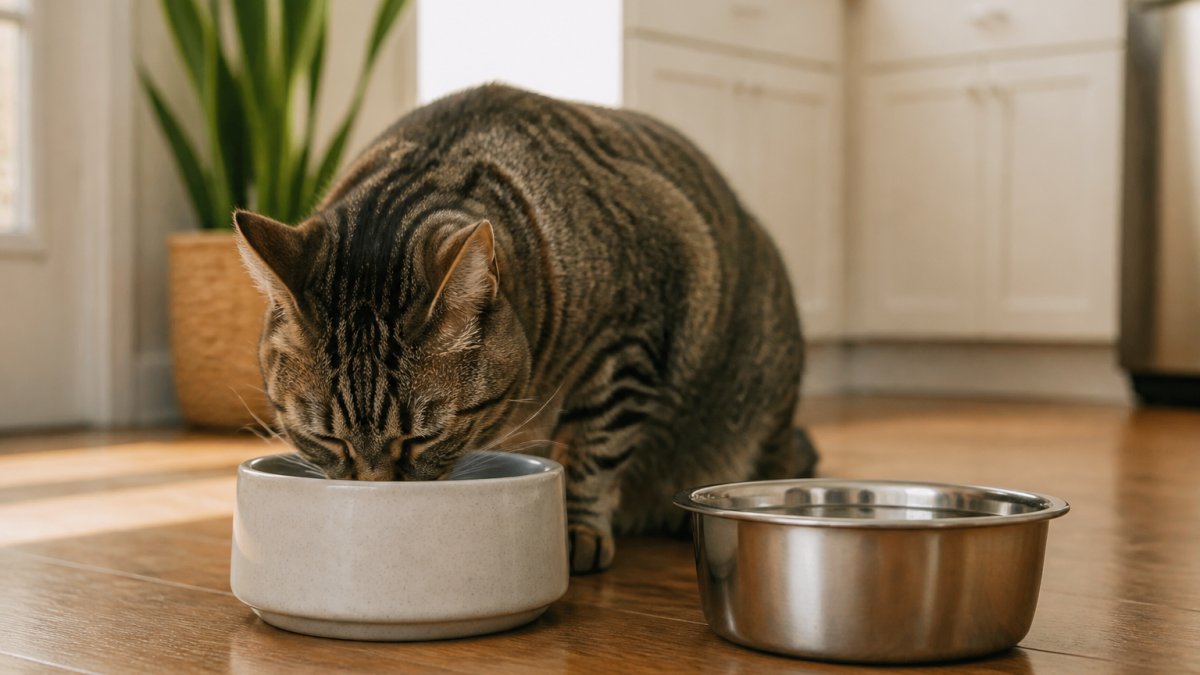
Weight cuts both ways.
Noise is the sleeper issue: steel on tile or hardwood clatters during a meal, and some pets are sensitive to that.
For shoppers focused on stability, a non-slip stainless steel feeder bowl with a silicone base gives you the easy cleaning of steel without the skating.

How to Clean Pet Bowls Made of Ceramic or Stainless Steel
How to clean pet bowls comes down to hot water, dish soap, and a full dry.
A routine that works:
- Scrape leftover food into the trash, not the sink.
- Wash with hot water and dish soap, or run it through the dishwasher if the bowl is labeled dishwasher safe.
- Rinse thoroughly so no soap residue remains.
- Dry fully before refilling, since standing water invites bacteria.
- Check the surface for chips, cracks, or deep scratches while it dries.
For ceramic, skip harsh scouring pads and sudden temperature swings. A hot bowl into cold water can crack it. For stainless steel, avoid steel wool, which leaves scratches that trap residue.
Wash water bowls daily and food bowls after every meal. That single habit does more for hygiene than any material choice.
Choosing Your Bowl at Paw Print Pet Supply
Our stainless steel pick is the Stainless Steel Pet Bowl Set with Silicone Mat, $23.99.

If you want ceramic, the ceramic cat and dog bowl with cartoon lettering is $18.78 and suits cats and small dogs.

Best for: the steel set suits multi-pet homes and messy drinkers. Skip if: your cat refuses to eat from anything that is not heavy and quiet, in which case go ceramic.
Frequently Asked Questions
Which is better for cats, ceramic or stainless steel?
It depends on the cat. Ceramic bowls are heavier, so they resist sliding and tipping, which suits cats that push their bowls around. Stainless steel is lighter, unbreakable, and dishwasher-safe, which makes daily cleanup easier. Cats with sensitive skin or whisker fatigue often do well with a shallow stainless steel bowl because the surface is smooth and nonporous. For most households, a stainless steel bowl for water and a ceramic bowl for food is a practical split.
Are stainless dog bowls safe?
Yes, food-grade stainless steel is one of the safest pet bowl materials. It is nonporous, does not hold bacteria or odor, and resists rust and corrosion. The key is buying food-grade steel rather than decorative or industrial-grade metal. Check that the bowl is labeled food-safe and has no sharp edges or exposed seams. Replace any stainless bowl that develops deep scratches or dents, since those spots can trap food residue.
Do ceramic or stainless steel bowls last longer?
Stainless steel usually lasts longer because it does not shatter. A dropped ceramic bowl can crack or chip, and a chipped glaze can expose the clay underneath. Stainless steel can dent if dropped on a hard floor, but it stays usable. That said, a well-made ceramic bowl kept away from tile floors and handled carefully can last for years. If durability and breakage risk are your top concern, stainless steel wins.
Which type of pet bowl is easier to clean?
Both clean up well if they are dishwasher-safe. Stainless steel bowls are typically dishwasher-safe and dry quickly. Ceramic bowls are also dishwasher-safe when the glaze is intact, but heavy stoneware can take longer to dry and may chip in the rack. For hand washing, use warm water and mild soap, rinse thoroughly, and dry completely. Avoid abrasive scrubbers on ceramic glaze, since scratches give bacteria a place to settle.
How do I choose the right bowl for my pet?
Start with your pet's size and feeding style. Measure how much food or water your pet takes at one sitting, then pick a bowl that holds it without being filled to the rim. Choose a heavy base if your pet slides the bowl across the floor, and a shallow width if your cat avoids deep dishes. Match the material to your priorities: stainless steel for durability and easy cleaning, ceramic for weight and appearance. Then confirm the bowl is food-safe and dishwasher-safe.
The bowl you pick matters less than the condition you keep it in. Chipped ceramic and deeply scratched steel both undermine the hygiene you are trying to protect, and replacing them is cheaper than a vet visit. Paw Print Pet Supply stocks a curated feeding range built around that standard, with free shipping on orders over $50 and a 30-day return policy if a bowl does not suit your pet. Get started with Paw Print Pet Supply and give your pet a feeding setup that holds up to daily use.
